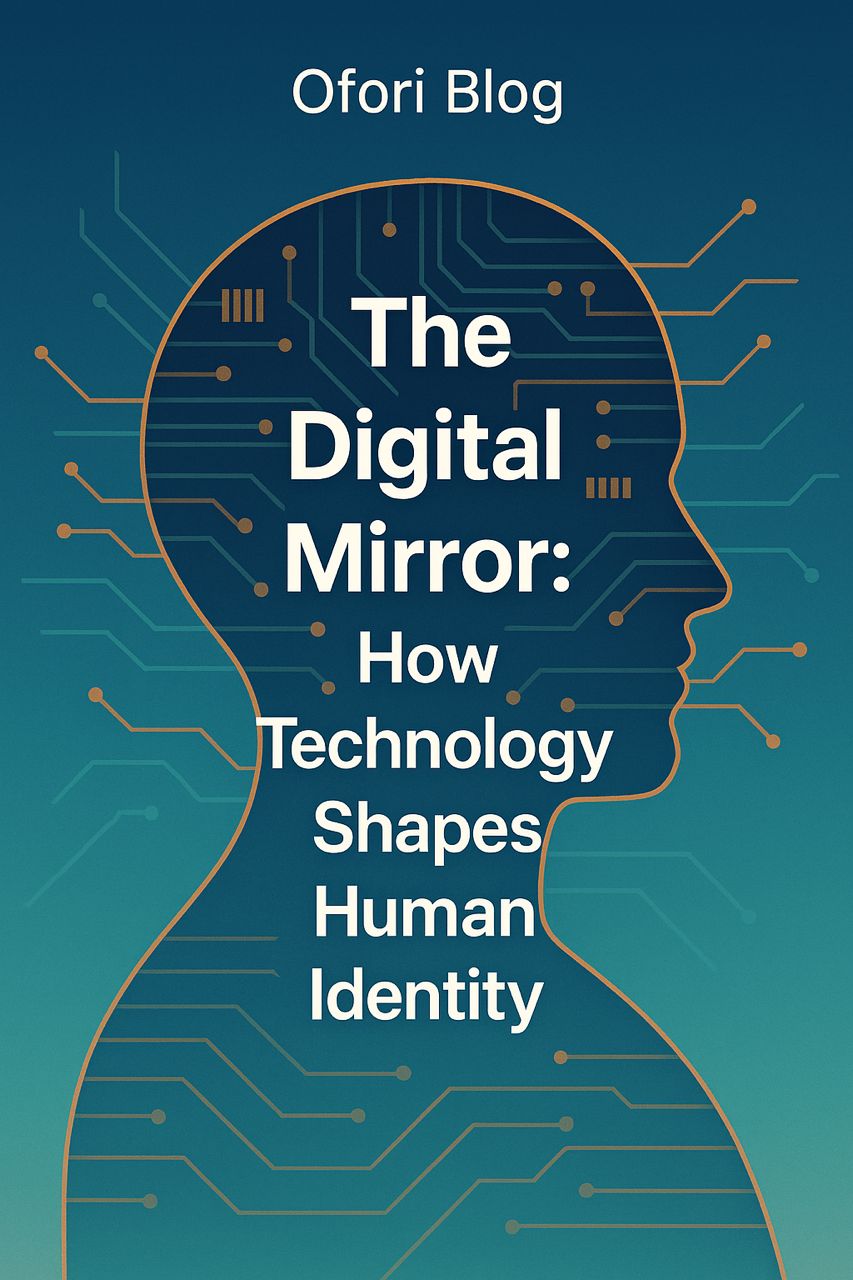
By Kwame Ofori Junior (Student Blog): Exploring Technology and Human Identity)
INTRODUCTION
Technology has become a defining force in shaping who we are and how we perceive ourselves. From the way we communicate to how we present our identities online, digital tools have become extensions of human behaviour. In the 21st century, technology no longer exists as something separate from us, it is deeply intertwined with our sense of self. Social media profiles, digital avatars, and even our online search histories form part of our identity. The question is no longer whether technology affects human identity, but how profoundly it reshapes it.
TECHNOLOGY AND PERSONAL IDENTITY
The rise of the digital world has blurred the boundaries between the real and virtual self. Platforms like Instagram, TikTok, and X (formerly Twitter) allow individuals to curate idealized versions of themselves. This “performance of identity” creates both empowerment and anxiety. Psychologists note that online spaces offer users a chance to explore multiple aspects of their identity that might be restricted in the physical world (Turkle, 2011). However, this flexibility can lead to confusion about authenticity, people begin to question whether their online self is who they truly are or just who they wish to be. The digital self becomes a mirror reflecting both aspirations and insecurities.
TECHNOLOGY AND RELATIONSHIPS
Technology has transformed relationships by redefining what connection means. While distance is no longer a barrier, friends and families can communicate instantly through FaceTime, WhatsApp, or Zoom, the depth of these interactions is often debated. According to Sherry Turkle (2015), technology offers the illusion of companionship without the demands of intimacy. People may feel “connected” but still lonely. At the same time, technology has allowed marginalized groups and individuals to find belonging and love through online communities and dating apps. The duality of technology in relationships shows that it can both unite and isolate us, depending on how we use it.
TECHNOLOGY AND COMMUNITY
Our sense of community has expanded far beyond geographical borders. Digital platforms have created global networks where people gather around shared interests, values, or experiences. Online activism, for instance, has given voice to social movements that might otherwise be silenced. Hashtags like #BlackLivesMatter and #MeToo demonstrate how collective digital identities can influence real-world change. However, these same platforms also foster echo chambers, spaces where people are exposed only to views similar to their own. This selective exposure can reinforce polarization and weaken empathy. Technology thus gives us the tools to build communities, but it also challenges us to maintain genuine dialogue across differences.
TECHNOLOGY AND SELF-EXPRESSION
Technology has revolutionized how humans express creativity. Artists, writers, musicians, and everyday users can share their work with a global audience within seconds. Platforms such as YouTube, Spotify, and TikTok allow for unprecedented cultural exchange. Even artificial intelligence tools like image generators and virtual assistants enable new forms of creative collaboration. Yet this accessibility raises questions about originality and ownership. When AI produces art or writing, who owns that identity of expression the user or the algorithm? As Marshall McLuhan (1964) noted, “we shape our tools and thereafter our tools shape us.” Human expression is no longer limited to natural ability; it now exists within the dynamic interplay between creativity and computation.
THE FUTURE OF HUMAN IDENTITY
As technology continues to evolve through artificial intelligence, virtual reality, and wearable devices, human identity will keep expanding into hybrid dimensions. In the near future, people may live between physical and virtual realities, building relationships and careers that exist entirely online. The concept of identity will become more fluid, less about where we are born or live, and more about how we interact, share, and create. While this future promises inclusivity and freedom, it also demands ethical awareness. To preserve authenticity and empathy, humans must learn to balance the convenience of technology with the depth of human experience.
CONCLUSION
Technology has not only altered how we interact with the world. It has changed how we define ourselves. It allows for growth, connection, and creativity, but also invites superficiality and disconnection if misused. Our digital lives are both empowering and consuming, liberating yet limiting. As we continue to evolve alongside our inventions, the challenge will be to maintain what makes us human: empathy, authenticity, and the ability to connect beyond the screen. In the end, technology does not replace identity it amplifies it.
REFERENCES
- McLuhan, M. (1964). Understanding Media: The Extensions of Man. McGraw-Hill.
- Turkle, S. (2011). Alone Together: Why We Expect More from Technology and Less from Each Other. Basic Books.
- Turkle, S. (2015). Reclaiming Conversation: The Power of Talk in a Digital Age. Penguin Press.